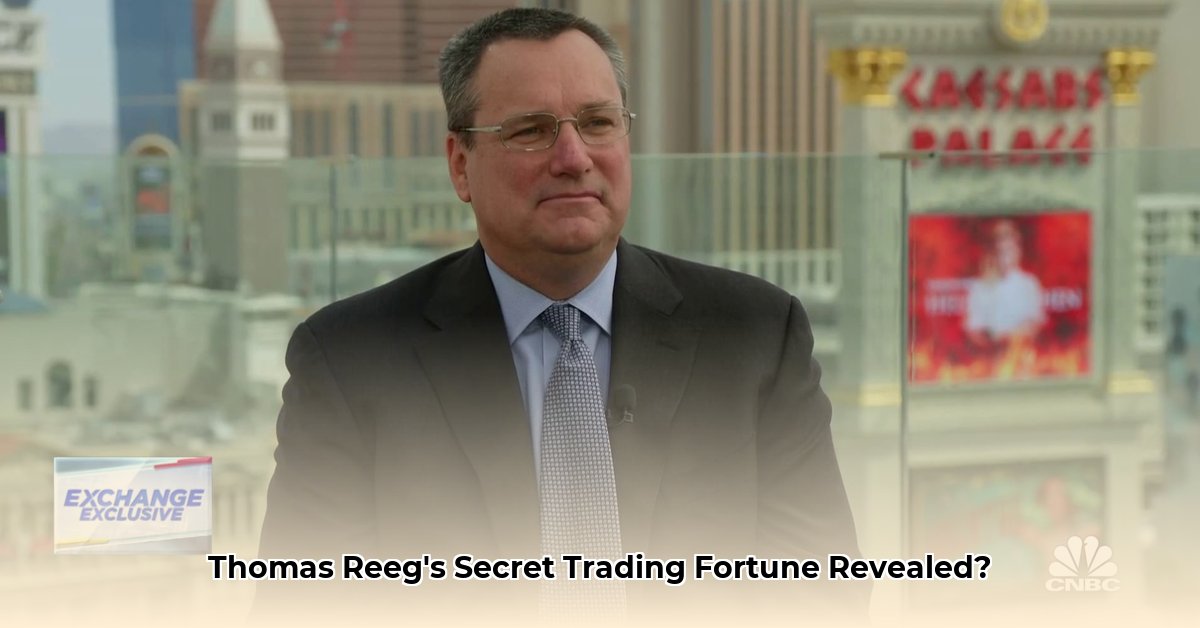
Thomas Reeg's Caesars Investment Strategy: A Deep Dive
Thomas Reeg, CEO of Caesars Entertainment, has generated significant interest among financial analysts due to his substantial trading activity in Caesars stock between 2020 and 2021. This analysis delves beyond a simple net worth calculation, focusing instead on the conflicting signals inherent in his buying and selling patterns and the limitations imposed by the lack of publicly available information concerning his holdings in NGA Holdco, LLC. The overarching conclusion is that a definitive assessment of Reeg's net worth remains elusive without greater transparency.
A Tale of Two Years: Contrasting Trading Activity
2020 witnessed Reeg's significant acquisition of Caesars stock, totaling $17,887,249.70. This considerable investment signaled strong confidence in the company's future prospects, particularly noteworthy given the prevailing economic uncertainty caused by the COVID-19 pandemic. This bold move indicated a bullish outlook and a willingness to take on considerable risk.
However, this narrative took a sharp turn in 2021. Reeg executed fifteen separate sales of Caesars stock, representing a substantial portion of his previous purchases. This reversal in strategy raises immediate questions: did his assessment of Caesars' future potential change significantly? Were these sales driven by personal financial goals or strategic considerations related to market conditions or internal company developments? The lack of clarifying information inhibits a definitive answer.
The NGA Holdco, LLC Enigma
A major obstacle in evaluating Reeg's net worth is the lack of publicly disclosed data regarding his holdings in NGA Holdco, LLC. This privately held company is a significant, yet unknown, component of his overall financial portfolio. The absence of transparent information regarding NGA Holdco’s valuation essentially renders any calculation of Reeg's total net worth speculative at best. This opacity hinders a complete understanding of his investment strategy and financial position.
Interpreting the Evidence: A Multifaceted Analysis
Several interpretations of Reeg's trading activity are plausible, though none can be definitively confirmed without comprehensive data.
- Market Dynamics: Fluctuations in the broader market could have influenced Reeg's decisions. A shift in market sentiment or assessment of emerging risks might account, in part, for his sell-off.
- Personal Financial Planning: Reeg's sales could reflect personal financial goals requiring liquidity for other investments or strategic diversification of his portfolio.
- Company-Specific Factors: Unseen internal developments at Caesars Entertainment, not yet publicly disclosed, may have informed Reeg's trading decisions. This possibility underscores the need for transparency in executive trading activity.
Actionable Insights for Key Stakeholders
The following table summarizes actionable insights tailored to various stakeholder groups:
| Stakeholder Group | Short-Term Implications | Long-Term Implications |
|---|---|---|
| Investors | Closely monitor Caesars' financial performance and debt levels; approach investment with caution. | Advocate for increased transparency regarding NGA Holdco holdings and corporate strategy. |
| Shareholders | Demand enhanced disclosure of executive trading activities and holdings in NGA Holdco, LLC. | Actively participate in shareholder meetings to press for greater financial transparency. |
| Financial Analysts | Refine valuation models to accommodate the uncertainty surrounding NGA Holdco’s valuation. | Conduct thorough due diligence, acknowledging the limitations presented by incomplete data. |
| Regulatory Bodies | Review regulations concerning the disclosure of executive trading activities; explore potential | Strengthen transparency requirements for executive trading activity to protect investor interests. |
Conclusion: The Need for Transparency
Determining Thomas Reeg's precise net worth remains an ongoing challenge due to the limited public information regarding his NGA Holdco, LLC investments. While his past trading activities offer intriguing insights into his investment strategy, the conflicting signals and significant data gaps necessitate a call for greater transparency in executive financial dealings. Greater transparency is crucial for promoting fair and equitable market practices, enabling informed investor decisions, and safeguarding investor confidence. 1